Executive Summary
Money is the most universal problem in the world and one of the least served by good software. Most people will never sit down with a financial advisor. The tools they do have mostly report what already happened instead of telling them what to do next.
OptiVault is an AI money coach that is live on iPhone today. With permission, it connects a person's accounts (read-only), builds a complete financial plan, answers questions in plain language by text or voice, delivers a weekly Financial Wrap and sends proactive notifications before problems happen.
That is the first stage of a longer journey. OptiVault is designed to evolve from an AI financial advisor into a proactive financial brain, then a permission-based financial autopilot, an AI wealth manager, and ultimately the Money OS: the intelligence and orchestration layer between people and their money. Along the way, OptiVault plans to bring banking, cards, investing and taxes into the same conversation through licensed partners, so people can act on their plan by asking instead of opening another app.
Our ambition is global. We are building a product that can serve more than one billion people in their own language, on the phone they already own, at a price that makes sense where they live. Our north-star aspiration is to build a company capable of reaching a $1 trillion valuation. These are ambitions, not forecasts or guarantees.
The Problem
Financial stress is common, persistent and expensive, and the help available is either too generic or too costly for most people.
Financial stress and overspending
- Paycheck-to-paycheck living: 67% of Americans lived paycheck to paycheck in 2025, up from 63% in 2024. Bank of America's analysis similarly estimated that almost one-quarter of households spend more than 95% of their income on necessities.
- Overspending and regret: a 2024 survey found that 74% of Americans admit to an overspending problem and 55% say they spend recklessly. Nearly 2 in 5 exceed their budget every month.
- Manual budgeting is exhausting: spreadsheets and manual-entry apps are abandoned because keeping them current is too time-consuming.
Low financial literacy, everywhere
- Only 27% of U.S. adults correctly answered five of seven basic financial knowledge questions in a 2024 FINRA survey.
- Globally, only about 1 in 3 adults understand basic financial concepts (S&P Global FinLit Survey). The gaps are widest where incomes are lowest.
Advice is priced for the wealthy
Traditional financial advice is commonly priced at around 1% of assets under management each year, often with account minimums and scheduled meetings. That model works for people who already have significant savings. It leaves out the majority who need help most with everyday decisions: spending, bills, debt and building a first safety net.
Fragmented tools
People juggle bank apps, budgeting apps, spreadsheets and investing apps. The data is inconsistent, the advice is generic and nothing connects today's spending to tomorrow's goals.
Why Now
Three shifts make a personal financial intelligence layer possible for the first time, at global scale and consumer prices.
- AI that can explain: modern language models can turn a person's real financial data into clear, personal guidance and answer follow-up questions instantly. The marginal cost of a good answer keeps falling.
- Open finance is spreading: permissioned account access is established or emerging across major markets, including the EU (PSD2), the UK (Open Banking), Brazil (Open Finance), India (Account Aggregator) and the United States (the CFPB's Section 1033 personal financial data rights rulemaking).
- Mobile everywhere: about 4.6 billion people used mobile internet at the end of 2023 (GSMA). The device that delivers OptiVault is already in most pockets on Earth.
- Accounts before advice: 76% of adults worldwide now have an account, up from 51% in 2011 (World Bank Global Findex 2021). Access to accounts has grown far faster than access to guidance.
Existing Solutions and Their Limits
| Category | Typical approach | Limitations |
|---|---|---|
| Budgeting apps | Categorize spending, set budgets and track expenses, often with manual input. | Time-consuming to maintain. Generic budgets that don't adapt to life changes. |
| Spreadsheets and DIY | People build their own trackers. | Error-prone, requires discipline, no proactive guidance. |
| Bank dashboards | Balances and basic spending categories. | No personalized advice, limited goals, one institution at a time. |
| Robo-advisors | Automated investing. | Investments only. No help with spending, bills, debt or emergency funds. |
| Generic AI chat | Answers finance questions. | No connected data, no memory of goals, advice without context. |
Most solutions offer reactive tracking rather than proactive planning. OptiVault's difference is continuity: one connected financial context that keeps every answer anchored to the person's goals.
 03
The Product Today
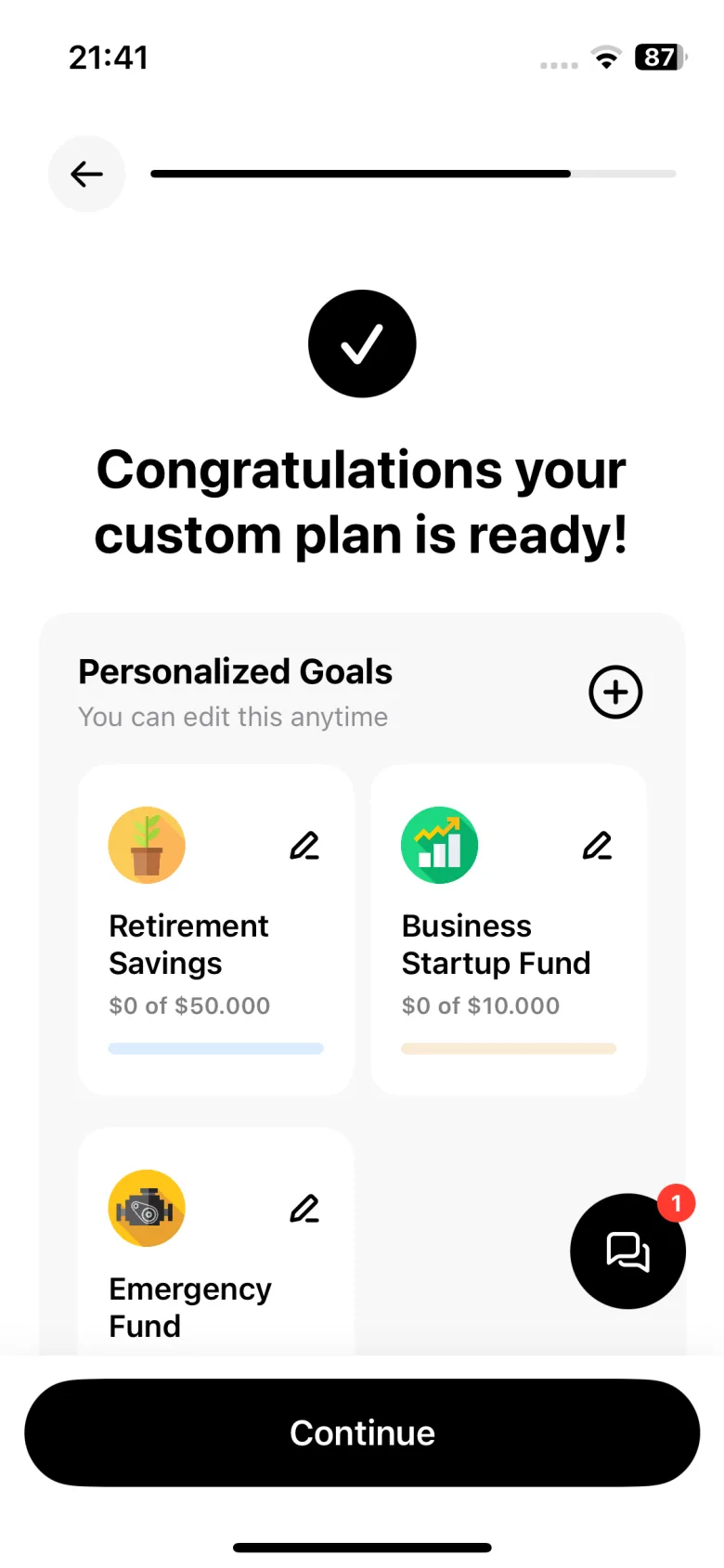
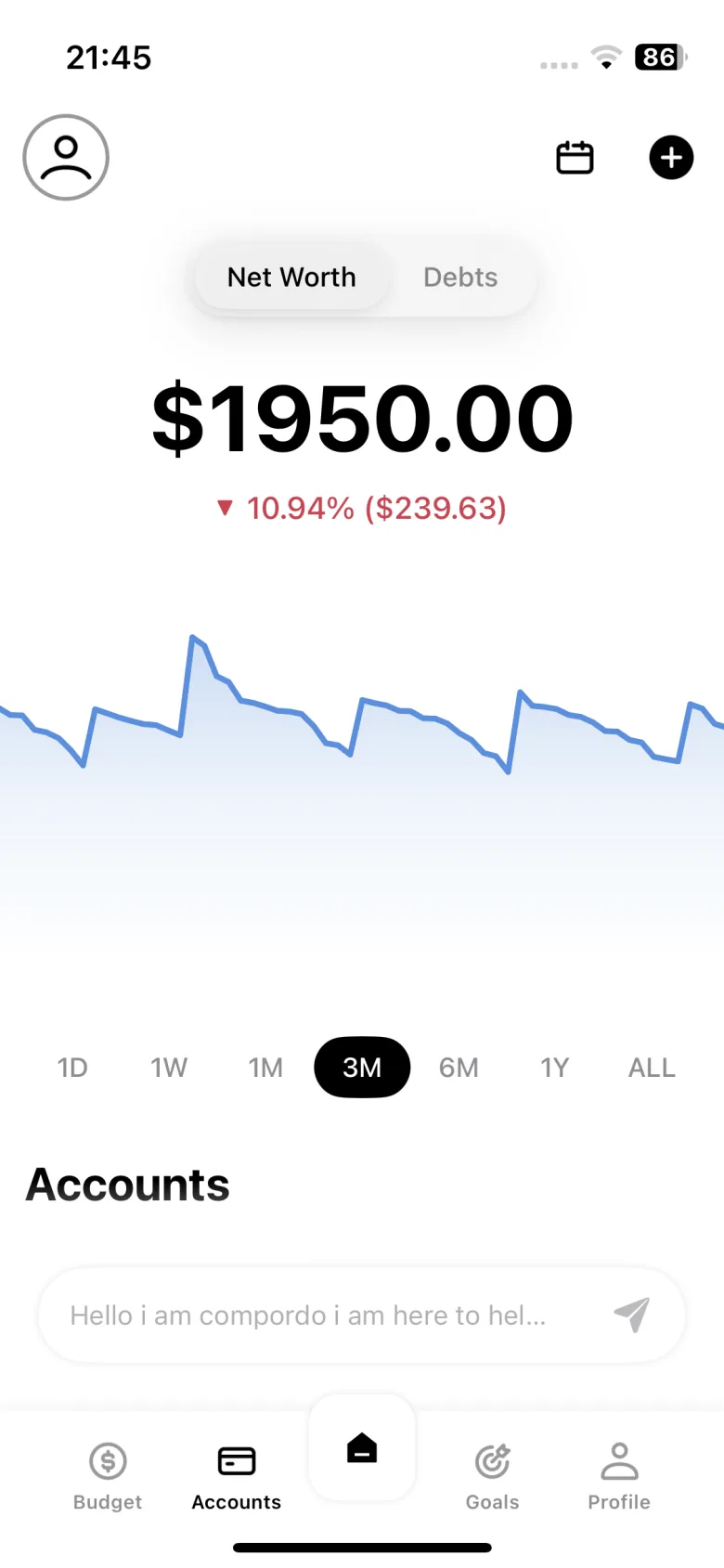
OptiVault is an AI-powered money coach for everyday people, live on iPhone. It links accounts through secure aggregators, categorizes transactions automatically, builds a complete personal plan and keeps optimizing it as life changes.
A complete financial plan
OptiVault builds a plan the way a planner would: it considers income, spending habits, bills, debts and goals, then allocates money across needs, wants, savings and debt, with a date for every goal.
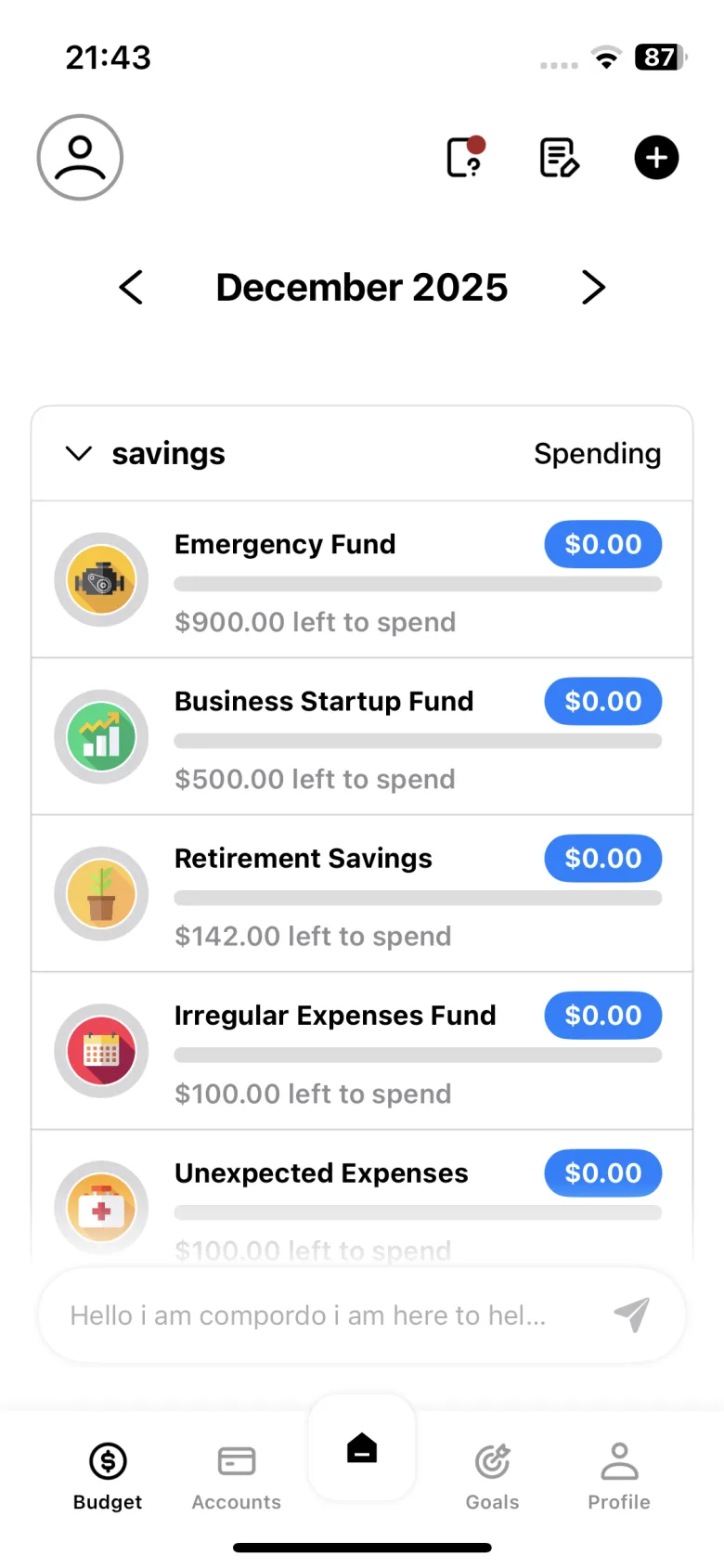
Automatic budgeting
Transactions are categorized automatically and budgets adapt as income and spending change. Manual entry stays optional.
Conversational AI, by text or voice
People ask questions the way they would ask a friend ("Can I go out tonight?", "How fast can I pay off my card?") and get answers grounded in their real numbers, with charts inside the conversation. The assistant can also update the plan, for example by moving budget from dining to savings.
The weekly Financial Wrap
A short, visual story every week: what you spent, what you saved, how close your goals are and your three moves for the week ahead. It builds a habit and is naturally shareable.
Smart notifications
Proactive alerts for upcoming bills, overspending, unusual or duplicate charges, opportunities to save and goal milestones, so people can act before problems happen.
Goals, net worth and visual insight
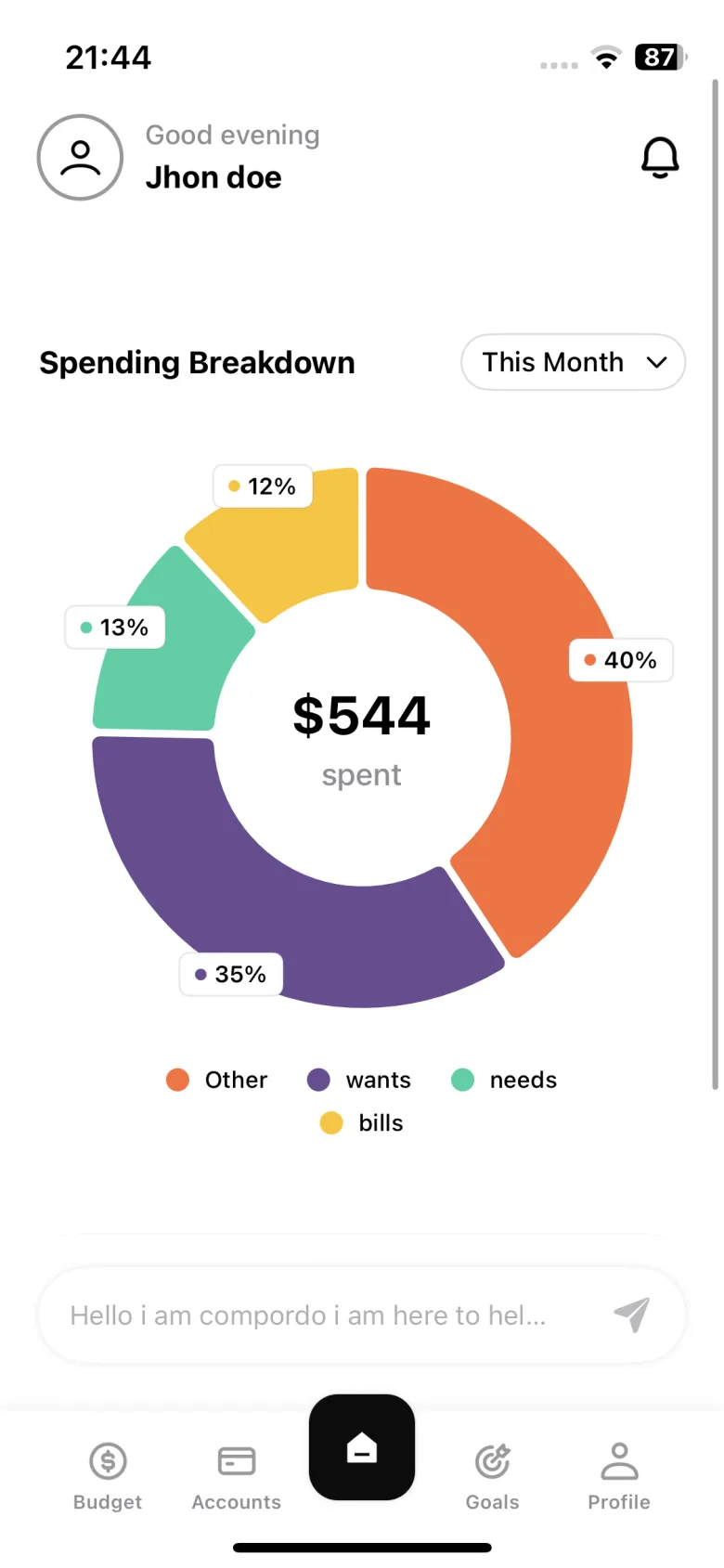
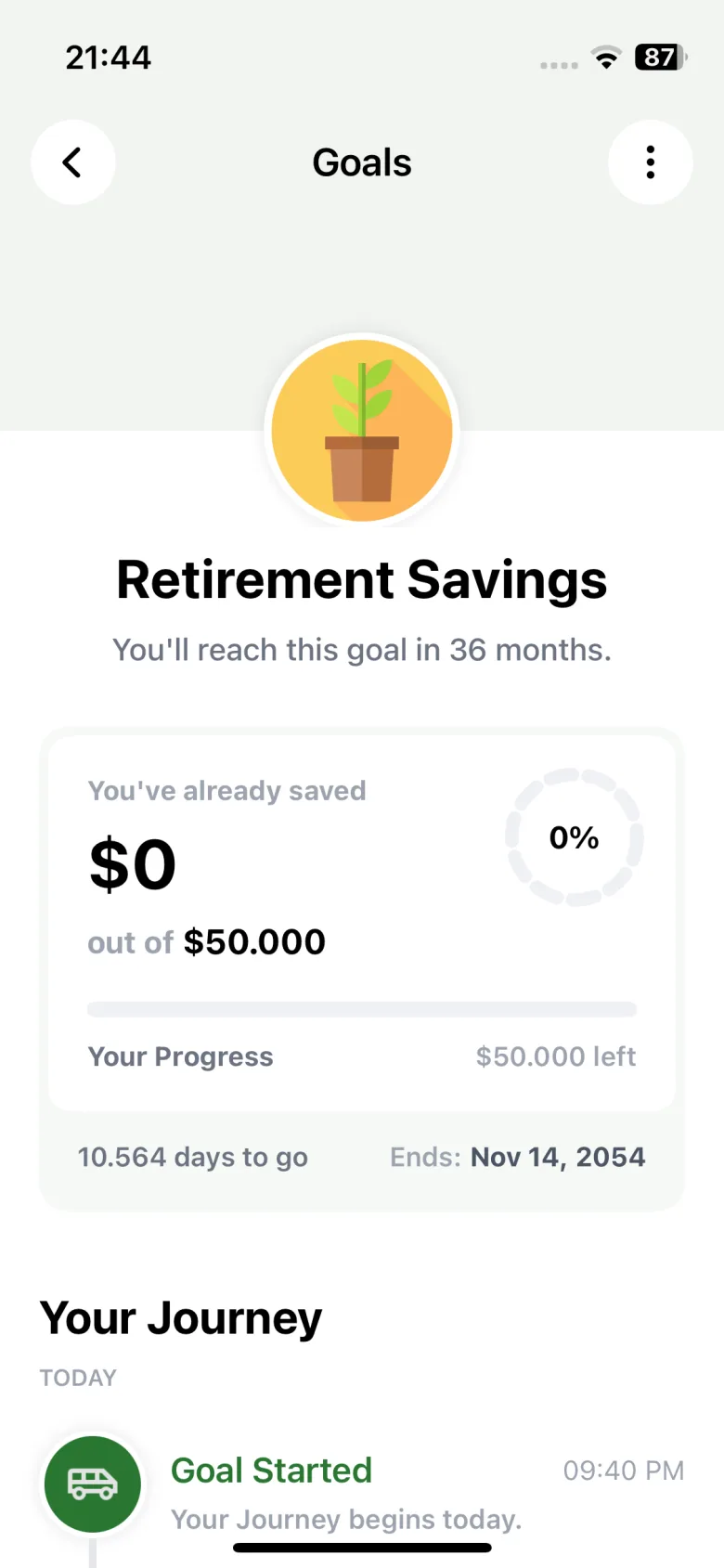
Goal journeys with target dates, a spending breakdown by needs, wants and bills, and one net-worth number across every account.
Who it serves
- Young professionals building emergency funds, managing student loans and saving for milestones.
- Families juggling multiple incomes, bills, children and travel.
- Freelancers and gig workers with variable income who need a plan that flexes.
- People living paycheck to paycheck who need help controlling spending and building a first safety net.
How OptiVault Works
Data integration: users connect accounts through secure aggregators such as Plaid. Transaction data is retrieved read-only and OptiVault never stores bank login credentials.
Transaction intelligence: machine learning categorizes transactions and identifies recurring bills, discretionary spending and irregular expenses.
Plan generation: the planning engine uses income, fixed expenses and goals to allocate money across essentials, savings, debt payments and discretionary spending.
Continuous monitoring: activity is compared with the plan. When someone is about to overspend or falls behind on a goal, OptiVault notifies them and proposes an adjustment.
Conversational interface: users ask questions or instruct the assistant to adjust budgets, create goals or simulate scenarios. Every answer explains its reasoning.
The Intelligence Layer
The long-term advantage is not a generic AI model. It is the permissioned financial context and the closed feedback loop built around each person: connect, understand, recommend, learn and, only with permission, act.
Our financial philosophy
- Stability first: essentials and an emergency fund come before discretionary spending or investing.
- Debt reduction prioritized: high-interest debt is tackled early to reduce long-term cost.
- Sustainable lifestyle: budgets fit real life, because a plan people abandon helps no one.
- Progress over perfection: small, consistent improvements compound.
- Personal context: recommendations reflect income variability, family, risk tolerance and local norms.
Vision and Roadmap: From Advisor to Money OS
OptiVault is building toward a future where managing money is continuous, intelligent and increasingly autonomous. Each stage earns the trust and permission required for the next, subject to user consent, security and regulation.
1. AI Financial Advisor
With permission, OptiVault connects accounts, understands income, spending, subscriptions and goals, and turns that information into practical guidance.
- A complete personal financial plan
- Voice and text conversations with personal financial data, with charts inside the answers
- A weekly Financial Wrap and proactive notifications
- Simple answers to "Can I afford this?", "Can I go out tonight?" and "What should I do with my money this week?"
2. Proactive Financial Brain
From reactive answers to continuous financial awareness. OptiVault monitors permissioned data, identifies emerging risks and opportunities, and speaks first.
- "You are overspending in this category."
- "You can move $300 to savings this week."
- "Reduce this budget to stay on track for your goal."
3. Financial Autopilot
Users define goals, boundaries and their preferred level of control. OptiVault adapts budgets and rules as circumstances change and enables approved actions such as moving money, increasing savings or cancelling unwanted subscriptions.
Automation stays permission-based, transparent and reversible where possible, with clear controls and audit trails. Higher-risk actions require explicit approval or carefully defined pre-authorization.
4. AI Wealth Manager
Investing by conversation, year-round tax planning and filing, debt optimization, cash management and long-term wealth building. People invest by asking OptiVault instead of opening a separate brokerage app, and every order is confirmed by them. Introduced through the appropriate regulated structures, licenses and financial partners.
5. The Money OS
The intelligence and orchestration layer between people and their money. Accounts, savings, investments, cards and wallets operate as one connected financial system, continuously coordinated around each person's goals. Banking, cards, investing and taxes all happen inside one conversation.
Chat with your finances → Understand your finances → Receive proactive guidance → Execute with permission → Coordinate your financial life → Money OS
Banking, Investing and Taxes, by Conversation
Today a person needs a different app for every money job: a bank app to move money, a card issuer to apply for credit, a brokerage app to invest and tax software once a year. None of them knows about the others. OptiVault's vision is to let people do all of it the way they already use OptiVault: by asking.
OptiVault already holds the plan, the goals and the full picture of a person's money, so it can turn a sentence into the right financial action. "Invest $200 from every paycheck", "Find me a card that pays me back on groceries" and "Will I owe taxes this year?" each become a prepared action that the person reviews and confirms, without opening another app.
| Money job | Today | With OptiVault (planned) |
|---|---|---|
| Invest | Open a separate brokerage app, choose an investment and work out how much you can afford. | Say how much and what it's for. OptiVault checks it against bills, the emergency fund and goals, shows the risk and the cost, and places the order through a licensed brokerage partner once you confirm. |
| Get a card | Compare cards on review sites and apply with each issuer. | Ask for a card that fits how you spend. OptiVault compares options against your real spending and lets you apply in the app, with card controls by voice. |
| Bank | Log in to each bank to move money or pay bills. | "Move $300 to savings" or "Pay my rent on the 1st", confirmed in one tap, across the accounts you connect. |
| Taxes | A once-a-year scramble for documents, with no idea what you'll owe until the end. | Year-round tax awareness: a running estimate of what you'll owe, reminders for quarterly estimated payments and deductible expenses tracked as they happen, then help preparing and filing through tax partners. |
How it stays safe
- You confirm every action. OptiVault prepares orders, applications and transfers. Nothing that moves money happens without explicit approval or a rule the person set up.
- Regulated partners do the regulated work. Accounts and cards would be issued by partner banks, investments held and executed by licensed brokerage partners, and tax returns filed through authorized providers.
- Acting is a separate permission. Today's account connections stay read-only. Acting on someone's behalf is a new, explicit permission that can be revoked at any time.
- Every action is explained and recorded, with a clear record of what was done, when and why.
Where it fits in the roadmap
Moving money and paying bills belong to the Financial Autopilot. Investing by conversation and year-round tax planning belong to the AI Wealth Manager. In the Money OS, banking, cards, investments and taxes run as one system around each person's goals.
OptiVault does not offer banking, card, brokerage or tax-filing services today. These are planned capabilities, and each would launch only with the required licenses, registrations and regulated partners in each market.
The Path to One Billion People
Good financial guidance has always been scarce because it depended on human time. AI changes that: the cost of a personal, patient, always-available coach can fall close to zero. That makes it possible to serve people who were never profitable to serve before.
One billion people is roughly one in five of the world's mobile internet users. Reaching them requires a product that works in many languages, on modest phones, with or without open banking, at prices that fit local incomes. We plan to get there in four phases.
Phase 1: Prove it in the United States (now)
Live on iPhone with more than 12,000 connectable institutions. The focus is product excellence, retention and measurable outcomes for users: savings built, debt paid down and bills never missed.
Phase 2: Every device, more open-banking markets
Android and web apps, then English-speaking markets with established open banking, such as the United Kingdom, Canada, Australia and Ireland.
Phase 3: Multilingual and multi-currency
The European Union under PSD2, with multi-language support and plans localized to each country's accounts, tax-advantaged products and financial norms.
Phase 4: The next billion
Mobile-first markets across Latin America, India, Southeast Asia, the Middle East and Africa, where open-finance frameworks such as Brazil's Open Finance and India's Account Aggregator are expanding access.
- Voice-first conversations in local languages, so literacy is not a barrier
- Affordable pricing tiers matched to local purchasing power
- Manual, SMS and statement-based tracking where bank APIs are not yet available
- Partnerships with banks, fintechs, telecom operators and employers
Growth engines
- The shareable Financial Wrap: a weekly story people want to share, which turns progress into word of mouth.
- Creators and affiliates: OptiVault's affiliate program is already live, rewarding creators who bring engaged users.
- Employers: financial wellness as a workplace benefit.
- Banks and fintech partners: embedding OptiVault's intelligence where people already bank.
- Search and education: free calculators and guides that answer the questions people are already asking.
What it takes
Global scale requires deep localization, licenses and regulatory approvals market by market, local data partners, institutional-grade security and pricing that respects local incomes. Reaching one billion people is a strategic ambition, not a forecast, and each phase depends on the success of the one before it.
Business Model
OptiVault operates on a subscription model with a 7-day free trial.
- 7-day trial: full access at no cost. Continued access requires a paid subscription.
- Subscription: the complete plan, conversational assistant, Financial Wrap, proactive notifications and goal tracking.
- Regional pricing: as OptiVault expands, pricing is designed to match local purchasing power.
- Future revenue: as the platform evolves toward the Money OS, revenue can expand through partnerships, value-added services and, subject to regulatory approval, financial-services and transaction revenue, for example from card, brokerage and tax-filing partnerships.
Each stage of the roadmap expands the value delivered: the advisor creates recurring subscription value, the proactive brain deepens engagement and retention, the autopilot can become an execution platform, the wealth manager expands value across a person's financial life, and the Money OS creates the potential for infrastructure-scale economics.
Why OptiVault Wins
- Permissioned context: every connected account, goal and decision makes the next answer more personal. Generic models start from zero each time.
- A closed feedback loop: recommendations, outcomes and user choices feed back into the system, so guidance improves with use.
- Trust as a product feature: read-only connections today, explicit permission for every future action, clear explanations and revocable access.
- Consumer craft: a product people enjoy opening, from the plan to the weekly Wrap, drives retention that tools and dashboards rarely achieve.
- Built-in distribution: shareable moments, an affiliate program and partner channels lower the cost of growth.
- Improving economics: as AI costs fall, the cost of serving each person falls with them, which makes global and emerging-market pricing viable.
Security, Privacy and Trust
- Encryption: user data is encrypted at rest and in transit.
- Read-only access: bank connections use secure aggregators with read-only permissions. OptiVault cannot move or withdraw money today.
- User control: users can disconnect accounts and delete their data at any time. OptiVault never sells personal data.
- Compliance readiness: OptiVault is designed around data-privacy regulations (such as GDPR and CCPA) and security frameworks (such as SOC 2). As the platform grows, it will seek the licenses each market and capability requires.
Ethical AI and Responsibility
- Assistive, not deterministic: the AI recommends and explains. Final decisions remain with the user.
- Transparency: every suggestion comes with its reasoning. No opaque black-box decisions.
- No exploitation: no selling of user data and no predatory practices. Recommendations align with users' best interests.
- Protecting vulnerable users: the assistant avoids risky strategies, promotes education and is designed with first-time savers and people with limited financial literacy in mind.
The $1 Trillion Ambition
A north-star aspiration
Our long-term ambition is to build OptiVault into a company capable of reaching a $1 trillion valuation. This is a north-star aspiration, not a current valuation claim, financial projection, promise or guaranteed outcome.
Reaching trillion-dollar scale would require global adoption, exceptional retention, measurable financial outcomes for users, durable revenue, trusted distribution, regulatory excellence, institutional-grade security and responsible stewardship of financial data. If OptiVault becomes the trusted interface through which people understand, decide and act on their money, its potential extends beyond personal-finance software toward foundational financial infrastructure.
Conclusion
Most people are under financial pressure, lack access to affordable guidance and are poorly served by tools that only report the past. OptiVault combines a complete plan, automatic budgeting, conversational AI, a weekly Financial Wrap and proactive notifications into one AI money coach that helps people take control and reach their goals.
The evolution is deliberate: chat with your finances, understand them, receive proactive guidance, execute with permission and ultimately coordinate your entire financial life through one intelligence layer. Built for the next billion people, OptiVault aims to become the Money OS.
Legal Disclaimer
OptiVault is a financial education and planning tool. It is not a registered investment adviser and does not provide regulated financial advice. Users should consider consulting a licensed professional for specific investment, tax or legal decisions. Final decisions and responsibility remain with the user.
This white paper contains forward-looking statements about OptiVault's plans, roadmap, markets and ambitions, including reaching more than one billion people and a $1 trillion valuation aspiration. These statements are not forecasts, promises or guarantees, and actual results may differ materially. Future capabilities may require licenses, regulatory approvals and partners that may not be obtained. Third-party statistics are cited from their original publishers.